


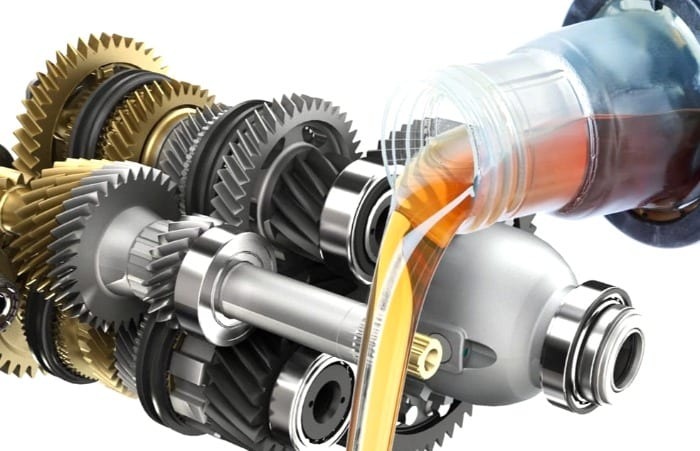
Checking the health status of the gearbox by checking the condition of Gear oil

During the CM process, gear condition monitoring has always been a serious challenge due to the lack of immediate access to the gearbox. In this article, we are trying to make this step easier by monitoring the condition of the gears through the analysis of the technical factors of the oil and its analysis.
Laboratory analysis:
Various test methods are used to control the condition of the gears in the gearbox. Analysis of gear lubricant based on the following factors is the most common among them. Comparison of the results of the used fluid inside the gearbox should be compared and analyzed with its unused type to make sure that the raw material was within the limits specified by the manufacturer, for example, the percentage of metal particles inside It can indicate the corrosion and wear of the gears, but before that, the metal particles of the new oil additives should be factored and the excess particles should be analyzed, because the gear oils also use metal elements, which are detailed in the manufacturer’s manual of the additives in accordance with Doers. Consumption has been determined:
1 – Viscosity: (Kinematic Viscosity at 40 degree C.in cSt)
Viscosity is the main property of gear oil. If the viscosity changes significantly, it means that it has lost its necessary ability.
Oxidation of oil leads to darkening of appearance and increase in viscosity. Of course, there are many other reasons for changes in viscosity. Viscosity factor control can be done by ISO 3104 / ASTMD445 D445 test method.
Changes in this number of more than 10%, compared to the initial state, can indicate that it is time to replace it.
2- Water content:
Water content in PPM or %age)
One of the important factors in the destruction of the structure of the lubricant is water and moisture because it reacts with iron and copper particles and causes the oxidation process.
These elements are primarily present in additive compounds and have a central role, and if water enters the environment, by oxidizing them and producing deposits inside the gearbox, it will reduce the life of the lubricant and increase the viscosity, which prevents the formation and maintenance of the thickness of the protective film in the The surface becomes worn and chemical and abrasion corrosion will actually start, and it will really be the bane of the life of the gearbox.
Moisture content is checked by ASTM D6304 test method. Therefore, in the CM process, it is recommended that if the water is more than 0.05 (ppm 500), the gearbox lubricant should be replaced.
3- Acid number:
(Acid number mg KOH/g
Test, Total Acid Number – Total Acid Number – is one of the methods of estimating the amount of degradation of additives, acid pollution and oxidation. In some cases, the TAN test does not directly measure the amount of oxidation, but only measures the by-product of oxidation. Also, it is useful to determine the degradation process of certain additives for the TAN process.
The measurement of acid concentration in petroleum products is determined according to the amount of potassium hydroxide (KOH) necessary to neutralize the acid in one gram of sample. This method is called titration and the standard unit of measurement is mg KOH/g.
The TAN test detects both weak organic acids and strong mineral acids in the environment. However, it does not indicate the absolute acid concentration of the oil sample. TAN tests can be performed by two titration methods: potentiometric and color indicator.
In the potentiometric method (ASTM D664 / ISO 6619) using a potentiometer, acidic structures are detected and considered for electronic reading.
In the color indicator method (ASTM D974 / ISO 6618) they use orange p-naphtholbenzene solution in acid and green-brown in base. When the acid-forming substances are neutralized by KOH, the sample changes from orange to green, indicating the end point.
The acid number should not be more than +0.5 higher than the new oil, and if this difference reaches the number one, the gear oil should be changed quickly.
The acid can be neutralized or removed from the oil in various ways. It is obvious that the alkalinity of the oil should be used to neutralize the incoming acid. This is done in gas, gasoline and diesel engine oil. In these oils, T BN booster base materials are used, that is, the new oil has a higher total alkalinity number – TBN, and with the operation of the engine oil and over time, it is depleted in the neutralization of the acidic environment.
4- The number of pollution particles:
(Particle count and size distribution.as per ISO 4406.No of particle per ml)
The particle count and size distribution of a good filter system are very important for lubricants. The type of design of the filtration surface can be different, but finally, only particles with a size of 12 microns or smaller should be allowed to pass. This size is determined even in turbine oils, up to 5 microns smaller. Monitoring the amount of pollutants in the lubricant is a vital matter. Is.
This type of Nas number test – the amount of particle pollution – and the reduction of the number of particles in the oil is also called Nas.
The ISO 4406 method for coding the pollution level of solid particles is a classification system that converts a given number of particles into an ISO code. Test methods frequently used for particle counting are: automatic particle counting according to ISO 11500 and manual counting. Particles according to ISO 4407. In the automatic particle counting method according to 0, the contamination level of the liquid sample is determined by automatic particle counting and using the light extinction principle. In this method, particle concentration is reported in three sizes: -4, -6, and -14 µm. In the standard manual particle counting method, particles deposited on the surface of a membrane filter are counted using an optical microscope. This particle counting is possible with two manual methods and image analysis, using lighting systems.
When using light turbine lubricants, especially for higher temperatures, filtration of less than 12 microns is recommended. Since the contamination of oil particles is one of the main causes of machine failure, it is vital to monitor the amount of hard pollutants.
5- Measurement of elements: (Contamination and wear elements in ppm)
An increase in metal elements in a lubricant can indicate abnormal wear of the system’s internal components. The analysis of oil elements and pollutants in a sample is done by the ASTM D5185 method by a device called ICP. Generally, ASTM D5185 method is used for elemental analysis.
A total of 22 elements can be analyzed with this method, which are: aluminum – barium – boron – calcium – chromium – copper – iron – lead – magnesium – manganese – nickel – phosphorus – potassium – silicon – silver – sulfur – tin – titanium – Zinc-vanadium.
Ba Al, B, Ca, Cr, Cu, Fe, Pb, Mg, Mn, Mo, Ni, P, K, Na, Si, Ag, S, Sn, Ti, V, Zn
Analyzing these cases and monitoring the condition inside the gearboxes will significantly reduce maintenance costs, and simpler visual controls can also be added to the mentioned items, for example gear wears, which cause them to become loose due to the operation of the gearbox with Laughter will be heard.
Formulation of periodic CM monitoring methods is absolutely necessary and management of this technical mechanism is one of the challenges of most industries.
Alireza Mohammadi
Chemical eng.